
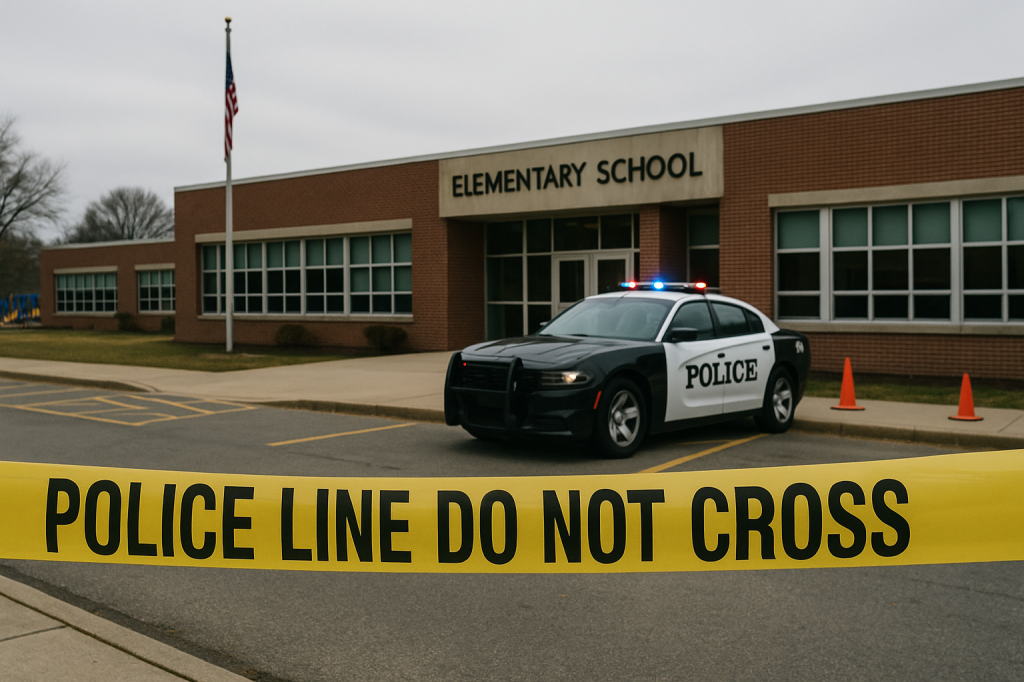
On a recent school day, a school located near the east end of Louisville received a threatening phone call just after noon. Police and district safety staff responded, a K-9 team swept the building, no credible device or danger was found, and instruction continued. Families were sent a summary email later that afternoon explaining that the call resembled a broader swatting pattern affecting multiple schools in the region. For many caregivers, those interim hours felt endless.
This revised article keeps the clear, practical guidance from the first version but adds long-tail keyword phrases and AnswerThePublic-style questions throughout so Louisville families searching for JCPS information can actually find it. It also frames parent and student perspectives as thoughts people often have in the moment, keeping empathy front and center.
Why “Send an Email Right Now” Isn’t Always the Safest Move (JCPS school safety)
Parents measure crises in heartbeats, not minutes. That feeling is real. At the same time, the first duty in any school threat is to secure people and the scene and hand control to law enforcement. Those first minutes involve decisions like whether to hold students in classrooms, evacuate a wing, or sweep a hallway—not drafting a detailed message. Communication should happen as soon as it’s safe and useful, not simply as soon as a phone rings.
Think of the process in two lanes running side by side:
- Life-safety lane: secure doors, account for students, coordinate with police, and keep hallways clear so responders can move freely.
- Information lane: once the scene is stable, notify families in a way that doesn’t create traffic gridlock, overwhelm the front office with calls, or fuel rumor chains that can pull focus from the investigation.
Immediate, play-by-play alerts can backfire in predictable ways. They can trigger crowds and traffic around a campus exactly when police need open lanes. They can flood phone lines and front offices with calls that slow down operations. And they can accelerate rumor velocity, which encourages copycat threats and spreads bad information faster than officials can correct it. The goal isn’t to keep parents in the dark; it’s to avoid making a tense situation harder to manage.
Long-tail intent worked into this section:
- “why schools don’t notify parents immediately during a lockdown”
- “JCPS emergency communication policy explained”
- “should parents go to school during a bomb threat in Louisville”
What It Feels Like for Families—and for Students (Louisville parent perspective)
To keep this conversation grounded, consider the thoughts that often surface on both sides of the classroom door:
- A parent may think that a short message confirming students are safe in class and that an investigation is underway would have helped them breathe again.
- Another parent may realize that an instant noon alert would have put them in the car—and many others, too—creating a traffic tangle at the very moment emergency vehicles needed clear access.
- A student may feel that not having a phone out kept rumors from exploding, yet still wish for one quick “I’m okay” message once the classroom felt calm.
These inner monologues aren’t contradictory; they’re the reality of a community that cares. Good policy respects all three.
Long-tail intent:
- “how parents feel during delayed school notifications JCPS”
- “student perspective on phone bans during lockdowns”
A 3-Phase Communication Model That Balances Safety and Transparency (best practices JCPS)
Phase 1: Awareness (once the scene is stable).
A short, neutral ping through text, call, and email that acknowledges the situation and sets expectations, without inviting a rush to campus. It should state that students are safe in class, that police are present, and that families should not come to school unless directed. No unverified details, no play-by-play—just a calm heads-up.
Phase 2: Status (after an initial sweep or assessment).
A brief update that signals progress, such as confirming that an initial search found no credible threat and instruction is continuing. This often lands 30–90 minutes after Phase 1 and helps families regulate anxiety.
Phase 3: Final Summary (after clearance).
A clear explanation of what was reported, what actions were taken, and what investigators concluded. If the event matches a swatting pattern, say so plainly. If reunification was required, include what went well and what will improve next time.
This cadence acknowledges families early, reduces rumor pressure, and still reserves the details for the moment they are accurate, calming, and useful.
Long-tail intent:
- “sample parent notification template for school threats JCPS”
- “how Louisville schools should communicate during emergencies”
A Quick Self-Audit of the Louisville East-End Incident (no school name)
Applying the model above:
- Phase 1—Awareness: Not evident. A short “we’re investigating—students are safe in class; please don’t come to campus” note shortly after noon would have reduced uncertainty without drawing crowds.
- Phase 2—Status: Not evident. While optional, a single checkpoint can help parents manage anxiety.
- Phase 3—Final Summary: Completed. The afternoon email explained the threat response, the K-9 sweep, and the finding of no credible danger consistent with swatting, and it confirmed that instruction continued.
Bottom line: The final summary did its job. Adding a brief Phase-1 awareness note—and, if feasible, one status checkpoint—would bring practice fully in line with best-practice communication while preserving operational control.
Long-tail intent:
- “case study: school bomb threat communication Louisville KY”
- “what JCPS schools can learn from recent swatting incidents”
The Cell-Phone Question: Do Bans Help or Hurt in a Crisis? (JCPS phone policy)
With bell-to-bell phone restrictions expanding, families reasonably ask whether bans increase or reduce risk. The answer depends on timing and purpose.
Why many safety teams limit phones during active incidents:
During a lockdown or shelter-in-place, the priority is silence and attention to adult direction. Open phone use introduces sound, light, and distraction. It can also amplify unconfirmed claims that spark panic far beyond the building and complicate investigations.
What everyday learning tells us:
Schools didn’t adopt phone limits only for emergencies. Many administrators report fewer disruptions, more attention, and better classroom climate when devices are “off and away” bell-to-bell. Research on academic outcomes is mixed, but several large analyses have found that reducing in-class phone access correlates with improved focus and, in some contexts, higher achievement—especially for students who struggle most. Phone limits aren’t a magic wand, but they are a helpful ingredient.
A balanced policy that respects both safety and reassurance (JCPS phone ban exceptions):
- Default: Phones “off and away” in backpacks or secure pouches during the school day.
- During secure/lockdown: Follow adult instructions; no calls or texts while the room is being secured.
- After an initial all-clear (teacher discretion): A brief, silent one-time check-in text may be allowed to reassure families; no social media posting; devices remain on silent.
- Documented exceptions: Medical devices, accommodations in IEPs/504s, or specific safety plans authorized by administration.
- Before/after school: Phone use per campus rules for rides, jobs, or activities.
Long-tail intent:
- “are cell phones allowed in JCPS schools 2025”
- “JCPS phone ban exceptions during emergencies”
- “benefits of phone bans for classroom focus Louisville”
Student-Centered Safety: Drills, Debriefs, and Aftercare (support for JCPS students)
Safety training works best when it is calm, age-appropriate, and predictable. Younger students don’t need dramatic simulations; they need plain-language steps they can remember: secure the door, stay quiet, and follow the adult in charge. After a drill or real incident, a short classroom debrief helps students make sense of what they experienced. Schools should also offer opt-in counseling and remind students how to report concerns safely. When students feel informed and supported, compliance improves and rumor-sharing drops.
Long-tail intent:
- “age-appropriate lockdown drills JCPS”
- “mental health support after school lockdown Louisville”
Equity & Accessibility: Communication Has to Reach Every Family (inclusive JCPS alerts)
Not every caregiver uses the same apps, has the same data plan, or speaks the same language at home. A safety-minded communication plan should:
- Send alerts via multiple channels (SMS, email, and robocall), with the district app as a bonus, not a requirement.
- Offer language access for the district’s most common home languages and use plain, jargon-free wording in every message.
- Provide SMS-first options for families with limited internet or who share devices.
- Publish a one-page, beginning-of-year handout that explains the emergency update cadence, the reunification plan, and what families should—and should not—do during an incident.
Long-tail intent:
- “JCPS emergency notifications Spanish Arabic”
- “how to sign up for JCPS text alerts parents”
What Schools Can Improve—Right Now (action plan for JCPS)
- Adopt message templates for the 3-phase cadence so staff aren’t writing from scratch during a response.
- Publish quarterly metrics: median minutes to the first awareness note and to the final summary; the percentage of incidents where all three phases were completed; and the languages covered in alerts.
- Practice reunification with local police each fall and share the parent-facing version so families know not to drive to campus unless directed.
- Clarify phone-ban exceptions in writing and train staff on when a brief check-in is appropriate after the initial all-clear.
- Educate the community about swatting—what it is, why measured communication helps investigators, and why false reports carry serious consequences.
- Build student aftercare into plans—quick debriefs, counseling sign-ups, and clear reporting pathways for threats or hoaxes.
Long-tail intent:
- “JCPS reunification plan for parents Louisville”
- “how JCPS handles swatting calls at schools”
What Parents Can Do—Today (JCPS parent checklist)
- Enroll in every alert channel your school offers (text, call, and email).
- Read the reunification plan now and keep a photo ID in your car. If an alert does not ask you to come to school, don’t—arriving early may block emergency vehicles and slow the response.
- Coach your student on the basics: secure the door, stay quiet, follow the adult. Explain why phones stay silent in the first moments of a lockdown and how a short check-in might be allowed after the all-clear.
- Avoid amplifying rumors. If you receive an unverified screenshot or secondhand claim, wait for the official update cadence before sharing anything further.
Long-tail intent:
- “what parents should do during a JCPS lockdown”
- “how to talk to kids about school safety Louisville”
A Note on Data and Transparency (measure what matters in JCPS)
Trust improves when communities can see progress. The district should publish local data each semester: the total number of threats investigated and the percentage found not credible; the average time from incident start to awareness note and to final summary; alert enrollment rates by language; and pre-/post-policy counts of phone-related disruptions. None of these numbers solves the problem on their own, but together they make safety and communication a continuous-improvement loop rather than a string of one-off reactions.
Bottom Line (clear takeaway for Louisville families)
- Safety first, empathy always. Families deserve timely, plain-language updates. A short awareness note once the scene is stable, a status checkpoint after an initial sweep, and a final summary after clearance strike the right balance between transparency and control.
- Phones off during the moment, brief check-ins after. Limiting phones protects quiet and attention during incidents and supports learning every day. A supervised, silent check-in after the all-clear respects family anxiety without undermining safety.
- Measure outcomes, not adrenaline. In the east-end incident, students remained safe, instruction largely continued, and a clear end-of-day summary arrived. Next time, adding a brief awareness ping earlier in the day—and possibly one status checkpoint—would complete the model and help families breathe easier.